ASTM A276 Type 321 Bolts are bolts made from Type 321 stainless steel, an austenitic alloy stabilized with titanium. The material is used in selected industrial applications requiring corrosion resistance and improved resistance to intergranular corrosion after certain elevated-temperature exposures. The finished bolts must also meet the applicable fastener requirements.


We are producing Fasteners in the same premises having range as Dia M 16 to Dia M 64 and Lengths up to 1200 mm for shouldered products. Un-shouldered products are manufactured up to length 6000 mm. Our present installed capacity for fasteners is 600 MT/Annum and is being expanded continuously.
ASTM A276 Type 321 Bolts
ASTM A276 Type 321 Bolts are stainless steel fastening components manufactured from Type 321 stainless steel, an austenitic stainless steel alloy stabilized with titanium. This grade is designed to provide resistance to intergranular corrosion following exposure to elevated temperatures, making it suitable for industrial applications involving heat, pressure, and demanding operating conditions. These bolts are used to connect, secure, and assemble equipment, structural components, piping systems, and machinery where dependable fastening performance is essential.
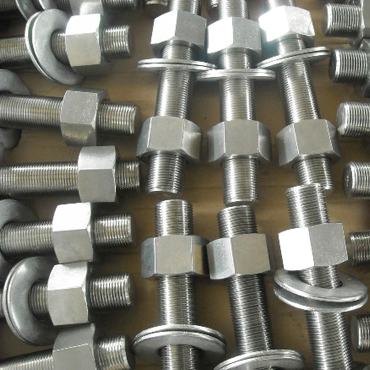
Table of Contents
ASTM A276 is a standard specification covering stainless steel bars and shapes, including hot-finished or cold-finished products. When Type 321 stainless steel is used to manufacture bolts, the applicable fastener product specifications, dimensional requirements, mechanical properties, and testing criteria should also be considered. Real Fasteners offers stainless steel fastening solutions selected according to customer requirements, application conditions, and material specifications.
Type 321 stainless steel contains chromium and nickel, which contribute to corrosion resistance and structural stability. Titanium is added to stabilize the alloy against chromium carbide precipitation during exposure to certain elevated-temperature conditions. This characteristic makes Type 321 useful in applications where conventional unstabilized austenitic stainless steels may be susceptible to intergranular corrosion after thermal exposure.
ASTM A276 Type 321 Bolts Manufacturers, ASTM A276 Type 321 Bolts Suppliers, ASTM A276 Type 321 Bolts Stockists, ASTM A276 Type 321 Bolts Exporters

ASTM A276 Type 321 Bolts are available in different dimensions, thread configurations, head styles, and finishes, subject to manufacturing capabilities and order requirements. Depending on the application, buyers can specify bolt diameter, length, thread pitch, head type, surface finish, and other dimensional details. Material certification and inspection documentation can also be discussed when required for industrial procurement.
Advantages of ASTM A276 Type 321 Bolts
One of the primary advantages of Type 321 stainless steel is its titanium stabilization. This helps reduce susceptibility to intergranular corrosion associated with chromium carbide precipitation during exposure to certain temperature ranges. The characteristic is particularly valuable in equipment that experiences welding, thermal processing, or repeated heating cycles. Actual corrosion performance depends on the operating environment, fabrication history, and material condition.
Type 321 stainless steel is used in applications exposed to elevated temperatures because of its alloy composition and stabilization characteristics. It is suitable for selected industrial assemblies involving heated process equipment, exhaust systems, and thermal processing installations. Engineers should evaluate the operating temperature, applied stress, load requirements, and exposure duration before specifying bolts for high-temperature service.
The chromium content of Type 321 stainless steel supports the formation of a protective passive layer on the metal surface. This provides resistance to corrosion in many industrial environments and helps maintain the integrity of fastening assemblies. The alloy can be suitable for selected chemical processing and industrial applications, although compatibility should always be verified against the specific chemicals, concentrations, temperatures, and exposure conditions involved.
Correctly selected Type 321 stainless steel bolts can provide dependable fastening performance in demanding operating environments. Their material characteristics support use in applications where resistance to heat-related degradation and corrosion is important. Proper installation, suitable tightening procedures, appropriate thread engagement, and regular inspection contribute to reliable service. The actual service life depends on mechanical loading, vibration, temperature fluctuations, and environmental exposure.
These bolts can be incorporated into a wide range of fabricated assemblies, mechanical systems, and industrial installations. Their availability in different dimensions and configurations allows engineers and procurement teams to select fastening components according to equipment design. Compatibility with mating materials, thread standards, and required mechanical properties should be confirmed before installation.
When specified correctly, Type 321 stainless steel fasteners can help reduce corrosion-related maintenance in compatible service conditions. Their stabilized composition can be beneficial in applications involving elevated-temperature exposure. However, maintenance requirements cannot be eliminated entirely, and inspection schedules should reflect the severity of the service environment and the criticality of the assembly.
Industrial Applications of ASTM A276 Type 321 Bolts
ASTM A276 Type 321 Bolts can be considered for selected chemical processing equipment, fabricated vessels, support assemblies, and industrial installations where corrosion resistance and thermal stability are required. Their suitability depends on the chemicals handled, process temperature, pressure, and mechanical loads. Engineers should verify the alloy's compatibility with the process medium before selecting it for critical connections.
Heat exchangers, heating systems, and thermal processing equipment may require fastening components capable of operating under changing temperature conditions. Type 321 stainless steel can be suitable for selected assemblies where titanium stabilization provides a material advantage. Bolt grade, tensile requirements, thermal expansion, and connection design must be evaluated to ensure safe and reliable performance.
Oil and gas facilities use stainless steel fasteners in selected process equipment, auxiliary systems, instrumentation assemblies, and industrial structures. ASTM A276 Type 321 Bolts may be specified where the service conditions support the use of this stainless steel grade. For critical pressure-containing connections or sour-service environments, the applicable project specifications, fastener standards, and material qualification requirements must be confirmed.
Power generation facilities and industrial machinery installations may use stainless steel fasteners in equipment exposed to heat, moisture, and demanding operating conditions. Type 321 bolts can be considered for appropriate housings, support structures, and auxiliary assemblies. Selection should account for temperature, vibration, fatigue, loading, and the mechanical requirements of the complete fastening system.
Certain exhaust assemblies, heated ducts, and thermal management components operate under repeated heating and cooling cycles. Type 321 stainless steel is used in selected elevated-temperature applications because of its stabilization characteristics. When choosing bolts for these systems, designers should evaluate oxidation resistance, thermal cycling, mechanical loading, and the compatibility of adjoining components.
Industrial fabricators use stainless steel bolts to assemble machinery, brackets, frames, equipment covers, and other components. Type 321 may be selected when the application requires its particular corrosion and temperature-related properties. The required dimensions, thread type, head style, and material certification should be established before ordering to maintain compatibility with the assembly design.
ASTM A276 Type 321 Bolts Manufacturers in India, ASTM A276 Type 321 Bolts Suppliers in India, ASTM A276 Type 321 Bolts Stockists in India, ASTM A276 Type 321 Bolts Exporters in India
Industrial buyers searching for ASTM A276 Type 321 Bolts Manufacturers generally require fastening products suitable for specific material, dimensional, and operating requirements. Real Fasteners supports procurement enquiries for stainless steel bolts intended for industrial equipment, fabricated assemblies, thermal systems, and other applications where Type 321 material is appropriate. Buyers should provide the applicable standard, diameter, length, thread configuration, quantity, and service conditions to help establish the correct product requirements.
Companies looking for ASTM A276 Type 321 Bolts Suppliers often need dependable product specifications, dimensional options, material traceability, and delivery coordination. These fasteners can be specified for selected chemical processing equipment, industrial machinery, heat exchangers, and high-temperature assemblies. Before purchasing, customers should confirm the required mechanical properties, thread dimensions, corrosion resistance, and compatibility with mating components to ensure that the supplied fasteners meet the intended application requirements.
Procurement teams searching for ASTM A276 Type 321 Bolts Stockists may require readily available sizes for planned maintenance, equipment fabrication, plant shutdowns, or replacement work. Availability depends on dimensions, quantity, finish, and stock conditions. Providing a detailed material and dimensional specification helps streamline the enquiry process and identify suitable products. For specialized or non-standard requirements, lead times and manufacturing arrangements should be confirmed before finalizing the purchase.
International buyers contacting ASTM A276 Type 321 Bolts Exporters generally look for material identification, export documentation, packaging suitable for transport, and coordination of delivery requirements. These bolts may be considered for industrial projects across chemical processing, power generation, equipment manufacturing, and other sectors. Buyers should confirm the governing fastener specification, required certificates, dimensional tolerances, quantity, destination requirements, and inspection provisions before placing an export order.
Material Options for ASTM A276 Type 321 Bolts
ASTM A276 Type 321 Bolts should be specified with careful attention to the difference between the stainless steel material specification and the standard governing the finished fastener. ASTM A276 covers stainless steel bars and shapes, while finished bolts may need to comply with other applicable fastener specifications. The exact material designation, product form, mechanical requirements, and certification must be confirmed with the supplier.
The chemical composition of Type 321 stainless steel generally includes chromium, nickel, and titanium, with controlled levels of carbon and other elements. Titanium stabilization is a defining feature of the grade. Exact composition limits should be verified against the applicable material specification and the material test certificate supplied with the product.
Mechanical performance depends on the condition of the material, manufacturing process, dimensions, and applicable fastener requirements. Tensile strength, yield strength, elongation, hardness, and other test values should not be assumed solely from the Type 321 designation. Where a bolt is used in a safety-critical or pressure-related assembly, the engineer should establish the required fastener standard and mechanical properties before procurement.
Real Fasteners can be contacted regarding required bolt dimensions, quantities, material documentation, finishes, and delivery arrangements. Customers should provide drawings or a detailed specification where available. This information helps establish whether the requested product can be supplied in the specified configuration and whether additional testing or inspection documentation is necessary.
ASTM A276 Type 321 Bolts Manufacturers in Mumbai, ASTM A276 Type 321 Bolts Suppliers in Mumbai, ASTM A276 Type 321 Bolts Stockists in Mumbai, ASTM A276 Type 321 Bolts Exporters in Mumbai
Why Choose Real Fasteners for ASTM A276 Type 321 Bolts?
Real Fasteners focuses on industrial fastening requirements, with attention to product specifications, material identification, and customer application needs. Selecting the correct stainless steel fastener involves more than choosing a material grade; it also requires matching the bolt design, mechanical properties, dimensions, and operating environment to the intended assembly.
Customers can submit their technical requirements for review, including the required stainless steel designation, applicable standards, thread details, surface finish, and quantity. Clear specification details help reduce procurement errors and support compatibility between fasteners and connected components.
For ASTM A276 Type 321 Bolts, buyers should confirm whether the project requires ASTM A276 material compliance alone or an additional finished-fastener standard. This distinction is important because a material specification does not automatically establish every dimensional and mechanical requirement for a completed bolt.
Real Fasteners serves industrial procurement enquiries for customers seeking stainless steel fastening products for fabrication, equipment maintenance, and project requirements. Contact the company with your drawings, technical specifications, and delivery expectations to discuss product availability and suitable supply options.
Specifications of ASTM A276 Type 321 Bolts?
| Specification | Details |
|---|---|
| Product Name | ASTM A276 Type 321 Bolts |
| Material Grade | Stainless Steel 321 |
| Material Standard | ASTM A276 / ASTM A276M (Material Specification) |
| UNS Number | S32100 |
| EN Number | 1.4541 |
| Material Type | Austenitic Stainless Steel |
| Stabilizing Element | Titanium |
| Nominal Diameter | As per Customer Requirement |
| Bolt Length | As per Customer Requirement |
| Bolt Type | Hex Bolts, Stud Bolts, Threaded Bolts and Custom Bolts |
| Head Type | Hexagonal or as per Customer Requirement |
| Thread Standard | Metric, UNC, UNF or as specified |
| Thread Type | Fully Threaded or Partially Threaded |
| Manufacturing Process | As per Applicable Fastener Specification |
| Surface Finish | Plain, Pickled, Passivated or as specified |
| Corrosion Resistance | Good resistance in suitable corrosive environments |
| Temperature Resistance | Suitable for selected elevated-temperature applications, subject to service conditions |
| Mechanical Properties | As per Applicable Fastener Grade and Specification |
| Testing | As per Customer Requirement and Applicable Standards |
| Material Test Certificate | Available as agreed at the time of order |
| Applications | Chemical Processing, Heat Exchangers, Thermal Equipment, Industrial Machinery and Power Generation |
| Packaging | As per Customer Requirement |
| Brand / Supplier | Real Fasteners |
People Also Search for ASTM A276 Type 321 Bolts?
ASTM A276 Type 321 Bolts, ASTM A276 Type 321 stainless steel bolts, Type 321 stainless steel fasteners, ASTM A276 stainless steel fasteners, SS 321 bolts, Stainless Steel 321 Bolts, UNS S32100 bolts, 321 stainless steel threaded bolts, titanium stabilized stainless steel bolts, high temperature stainless steel bolts, corrosion resistant stainless steel bolts, ASTM A276 Type 321 bolt specifications, Type 321 bolt dimensions, Type 321 bolt chemical composition, Type 321 bolt mechanical properties, stainless steel hex bolts, 321 stainless steel stud bolts, stainless steel machine bolts, industrial stainless steel fasteners, ASTM A193 stainless steel bolts, ASTM A276 Type 321 Bolts Manufacturers in India, ASTM A276 Type 321 Bolts Suppliers in India, ASTM A276 Type 321 Bolts Stockists in India, ASTM A276 Type 321 Bolts Exporters in India, ASTM A276 Type 321 Bolts in US, Type 321 bolts for chemical processing, Type 321 bolts for heat exchangers, stainless steel bolts for elevated temperatures, Type 321 fastener material certificates, Real Fasteners stainless steel bolts
Frequently Asked Questions for ASTM A276 Type 321 Bolts?
-
1. What are ASTM A276 Type 321 Bolts?
-
2. What are the main advantages of Type 321 stainless steel bolts?The main advantages include titanium stabilization, resistance to intergranular corrosion under suitable conditions, general corrosion resistance, and suitability for selected elevated-temperature applications. Actual performance depends on the environment, mechanical loading, manufacturing condition, and correct fastener specification.
-
3. Where are ASTM A276 Type 321 Bolts used?These bolts may be used in selected chemical processing equipment, heat exchangers, thermal systems, industrial machinery, exhaust assemblies, and fabricated equipment. Their suitability should be assessed according to the operating temperature, corrosion exposure, oad requirements, and governing project standards.
-
4. Are ASTM A276 Type 321 Bolts suitable for high-temperature applications?Type 321 stainless steel is used in certain elevated-temperature environments because titanium stabilization helps reduce susceptibility to intergranular corrosion associated with carbide precipitation. However, the bolt's allowable operating conditions depend on its finished-fastener specification, mechanical properties, applied stress, temperature, and service duration.
-
5. What information is required to order ASTM A276 Type 321 Bolts from Real Fasteners?Provide the required material designation, applicable fastener standard, bolt diameter, length, thread type, head style, surface finish, quantity, and delivery location. If required, specify material test certificates, inspection documents, and other quality requirements. These details help Real Fasteners review the enquiry and confirm availability.