Stud bolts are used to fasten flanges, pipelines, pressure vessels, valves, machinery and industrial equipment. They provide secure threaded connections in applications requiring reliable clamping force and convenient maintenance.


We are producing Fasteners in the same premises having range as Dia M 16 to Dia M 64 and Lengths up to 1200 mm for shouldered products. Un-shouldered products are manufactured up to length 6000 mm. Our present installed capacity for fasteners is 600 MT/Annum and is being expanded continuously.
Stud Bolts
Stud bolts are externally threaded fasteners designed to secure two or more components together using nuts at one or both ends. Unlike conventional bolts, stud bolts generally do not have a conventional bolt head, allowing them to be installed in threaded holes or used with nuts on both ends. They are widely used in industrial piping systems, pressure vessels, flanges, machinery, and heavy-duty equipment where reliable fastening and secure joint assembly are essential.
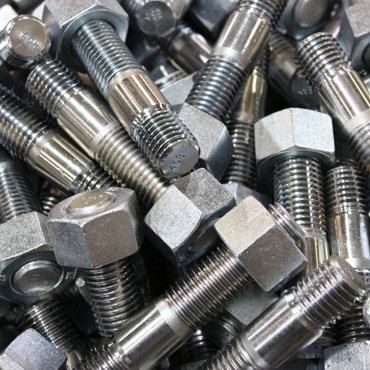
Real Fasteners offers stud bolts for industrial applications that require dependable fastening, dimensional accuracy, and consistent material quality. These fasteners are available in different materials, thread configurations, diameters, lengths, and finishes to suit diverse engineering requirements. Depending on the application, stud bolts can be manufactured from carbon steel, alloy steel, stainless steel, and other specified materials to meet operating conditions such as pressure, temperature, corrosion exposure, and mechanical loading.
Stud bolts are commonly used in flange connections, where they pass through aligned bolt holes and are tightened with nuts to create a secure joint. Their threaded construction allows controlled tightening and helps maintain clamping force across connected components. Stud bolts are available in full-threaded and partially threaded configurations, with dimensions and thread forms selected according to relevant engineering specifications and customer requirements.
Stud Bolts Manufacturers, Stud Bolts Suppliers, Stud Bolts Stockists, Stud Bolts Exporters

Advantages of Stud Bolts
Stud bolts provide several advantages for industrial fastening applications, particularly in assemblies that require high clamping force, maintenance access, and dependable joint performance. Their headless design makes them suitable for installations where conventional headed bolts may be impractical.
One key advantage of stud bolts is their ability to provide secure fastening in demanding service environments. When selected according to the required material grade, dimensions, and tightening procedure, they help maintain reliable connections in piping systems, pressure equipment, and industrial machinery.
Stud bolts also offer flexibility in installation and maintenance. Since they can be used with nuts on both ends or installed into tapped holes, they support a variety of joint designs. In applications such as flanged piping connections, stud bolts can be removed and replaced during maintenance without requiring changes to the connected components.
Material versatility is another important benefit. Stainless steel stud bolts can be selected for applications requiring corrosion resistance, while carbon steel and alloy steel options are used where strength, temperature resistance, or specific mechanical properties are required. The appropriate grade depends on the operating environment and applicable design standards.
Dimensional flexibility allows stud bolts to accommodate different flange thicknesses, equipment configurations, and fastening requirements. Available thread sizes, lengths, and finishes can be specified to suit the intended application. Properly selected stud bolts also support uniform load distribution when installed using the recommended tightening sequence and torque or tension requirements.
Industrial Applications of Stud Bolts
Stud bolts are extensively used in industrial sectors where strong, reliable, and serviceable fastening connections are required. Their design makes them particularly suitable for bolted flange joints, pressure-containing equipment, and heavy-duty mechanical assemblies.
Real Fasteners caters to industrial requirements for related sourcing, providing fastening solutions for flange connections, pipelines, pressure vessels, and industrial equipment. Stud bolts are selected according to material grade, thread specifications, dimensions, and the operating conditions of the intended application.
For projects requiring consistent product specifications and dependable order fulfillment, Real Fasteners supports buyers looking for for industrial construction, plant maintenance, engineering, and infrastructure applications. Stud bolts can be specified in various sizes, materials, and configurations to meet project drawings and applicable standards.
Industrial distributors and maintenance contractors often require readily available fasteners for planned shutdowns, equipment repairs, and replacement activities. Real Fasteners serves requirements associated with , offering stud bolt options for flange assemblies, mechanical installations, and industrial maintenance needs, subject to size, grade, and stock availability.
For international procurement and industrial project requirements, Real Fasteners addresses demand associated with , supporting buyers seeking stud bolts for oil and gas facilities, petrochemical plants, power generation systems, marine installations, and other industrial applications. Product specifications, documentation, packaging, and shipment requirements can be coordinated according to the order.
Stud Bolts Manufacturers in India, Stud Bolts Suppliers in India, Stud Bolts Stockists in India, Stud Bolts Exporters in India
Stud bolts are widely used in oil and gas installations for securing pipeline flanges, valves, manifolds, and pressure-containing equipment. Material grade and dimensional selection are important for connections exposed to high pressure, temperature variations, vibration, and potentially corrosive environments.
Chemical processing facilities use stud bolts in pipelines, reactors, pumps, heat exchangers, and pressure vessels. Stainless steel and suitable alloy steel grades may be selected according to the chemicals, temperatures, and operating conditions involved.
Power plants rely on stud bolts for fastening equipment in steam lines, turbines, boilers, heat exchangers, and other mechanical systems. The specified material and fastening procedure must be appropriate for the operating temperature, pressure, and loading conditions.
In construction and heavy engineering, stud bolts are used in structural equipment, machinery assemblies, industrial supports, and fabricated components. Their versatility allows engineers to specify fastening arrangements for a wide range of installation requirements.
Marine environments can expose fasteners to moisture, salt, and corrosive conditions. Suitable stainless steel or other corrosion-resistant stud bolt grades are used in shipboard equipment, piping connections, and marine machinery, depending on service requirements.
Manufacturing plants use stud bolts for assembling machinery, securing equipment housings, and maintaining industrial systems. Their removable design supports inspection, replacement, and routine maintenance when the correct installation and removal procedures are followed.
Material Options for Stud Bolts
Stud bolts are manufactured in various materials and specifications to meet different industrial fastening requirements. Material selection depends on the application, required mechanical properties, corrosion resistance, and service temperature.
Common material options include carbon steel, alloy steel, stainless steel grades such as SS 304 and SS 316, and other special alloys as specified. Depending on the project, stud bolts may conform to ASTM A193, ASTM A320, or other applicable standards. Compatible nuts may be specified under standards such as ASTM A194.
Stud bolts are available in metric and imperial thread sizes, with UNC, UNF, metric, and other thread configurations depending on the specification. Surface finishes may include plain, black oxide, hot-dip galvanized, zinc-coated, or other finishes suitable for the intended operating environment.
The required dimensions, thread type, material grade, length, coating, and inspection documentation can be specified according to customer drawings, engineering requirements, and applicable standards. Compliance should be confirmed against the relevant standard and purchase specification for each order.
Stud Bolts Manufacturers in Mumbai, Stud Bolts Suppliers in Mumbai, Stud Bolts Stockists in Mumbai, Stud Bolts Exporters in Mumbai
Why Choose Real Fasteners for Stud Bolts?
Real Fasteners caters to industrial fastening requirements with stud bolts designed for a variety of engineering and infrastructure applications. Product selection can be aligned with customer specifications, including material grade, diameter, length, thread configuration, and finish.
The company supports requirements for standard and customized stud bolts, subject to manufacturing and sourcing capabilities. Buyers can specify the intended application and technical requirements to identify suitable fastening options for their projects.
For industrial procurement, correct material identification, dimensional consistency, and compliance with the specified standard are essential. Real Fasteners can coordinate product requirements and relevant documentation according to the agreed order specifications, helping buyers source stud bolts for new installations, replacement requirements, and maintenance operations.
Specifications of Stud Bolts?
| Product Name | Stud Bolts |
|---|---|
| Material | Carbon Steel, Alloy Steel, Stainless Steel, Duplex Steel, Nickel Alloys |
| Standards | ASTM A193, ASTM A320, ASME, DIN, ISO |
| Common Grades | ASTM A193 B7, B7M, B8, B8M, B16; ASTM A320 L7, L7M |
| Diameter | As per Customer Requirement |
| Length | As per Customer Requirement |
| Thread Type | Metric, UNC, UNF, 8UN |
| Threading | Fully Threaded, Partially Threaded |
| Type | Double End Stud Bolts, Full Threaded Stud Bolts, Tap End Stud Bolts |
| Surface Finish | Plain, Black Oxide, Hot-Dip Galvanized, Zinc Plated, PTFE Coated |
| Coating | As per Customer Requirement |
| Nut Compatibility | ASTM A194 Gr. 2H, 2HM, 4, 7, 8 and other compatible grades |
| Manufacturing Process | Forging, Thread Rolling, Machining |
| Application | Oil & Gas, Petrochemical, Power Plants, Refineries, Pressure Vessels, Industrial Piping |
| Testing & Certification | Mill Test Certificate (MTC), Chemical Analysis, Mechanical Testing, Third-Party Inspection as specified |
| Packaging | Standard Export Packaging or As per Customer Requirement |
| Availability | As per Customer Requirement and Stock Availability |
People Also Search for Stud Bolts?
Stud Bolts, Square Stud Bolts, Carbon Steel Stud Bolts, Alloy Steel Stud Bolts, Flat Stud Bolts, Plain Stud Bolts, Spring Stud Bolts, Lock Stud Bolts, Fender Stud Bolts, Sealing Stud Bolts, Hardened Stud Bolts, Heavy Duty Stud Bolts, Industrial Stud Bolts, Metric Stud Bolts, Imperial Stud Bolts, DIN Stud Bolts, ISO Stud Bolts, ASTM Stud Bolts, Washer Sizes, Washer Dimensions, Washer Thickness, Washer Material Grades, Stud Bolts for Bolts, Stud Bolts for Nuts, Corrosion Resistant Stud Bolts, Industrial Washer Manufacturers, Stud Bolts Manufacturers in India, Stud Bolts Suppliers in India, Stud Bolts Stockists in India, Stud Bolts Exporters in India
Frequently Asked Questions for Hex Bolts?
-
What are stud bolts used for?
-
Which materials are available for stud bolts?Stud bolts are available in carbon steel, alloy steel, stainless steel and other special alloys. Common choices include ASTM A193 B7, B8 and B8M grades, depending on the required mechanical properties and operating environment.
-
Which standards are used for stud bolts?Common stud bolt specifications include ASTM A193 for high-temperature or high-pressure service and ASTM A320 for low-temperature service. The appropriate standard and grade depend on the application and project requirements.
-
Are customized stud bolts available at Real Fasteners?Stud bolts can be specified according to customer requirements for material grade, diameter, length, thread type and surface finish, subject to availability and manufacturing or sourcing capabilities.
-
What factors affect the price of stud bolts?Stud bolt pricing depends on material grade, diameter, length, thread specifications, surface finish, order quantity and applicable inspection or documentation requirements. Contact Real Fasteners for a quotation based on your specifications.